assimilation
a process by which a minority or immigrant group is through contact absorbed into the culture of another group or groups.
bias
A mental tendency, preference or prejudgment. Could be positive or negative.
censorship
The action of suppressing in whole or in part something that is considered politically or morally objectionable. Letters written by Japanese Canadians were opened, read and in many cases pieces were blacked out or cut out. Delivery was delayed and free discussion between friends and family members who were separated was inhibited. The contents of the only English language Japanese Canadian newspaper “The New Canadian” had to be approved by a censor before going to press.
concentration camp
A term used by many Nisei during the war to describe interior settlements. At their peak in the spring of 1943 these camps held 12,177 Japanese Canadians. This figure does not include an additional 699 that were being held in the prisoner of war camp in Angler, Ont.
curfew
A police or military regulation requiring persons to keep off the streets after a designated hour. Order-in-Council of Feb. 24, 1942 restricted all Japanese Canadians to their homes from sunset to sunrise within the 100 mile protected area on the coast of BC. The RCMP enforced restrictions on personal freedom.
discrimination
Actions resulting from a particular mindset or prejudice. A means of treating people negatively because of their group identity. Discrimination may be based on age, ancestry, gender, language, race, religion, political beliefs, sexual orientation, family status, physical or mental disability, appearance or economic status. Acts of discrimination hurt, humiliate, and isolate the victim.
enemy alien
An alien (foreigner) living in a country that is at war with his country of ancestry. A term used in government notices and in the media to describe all Japanese Canadians as enemies of the state. The term was applied regardless of birthplace or citizenship and required no proof of crimes against Canada.
espionage
The work of spies. Politicians and some people in British Columbia said that Japanese Canadians would not be loyal to Canada and would become spies and saboteurs. The RCMP and the military said that their investigations found no evidence to support such a claim. Nevertheless, the evacuation was carried out as a “security precaution.”
evacuation
To move out or remove from a threatened area or place. The term used for the removal of all people of Japanese ancestry from the “protected area” on the Pacific coastline to places at least 160 kilometres inland as documented in PC 1486, February 24, 1942. This process led to the eventual resettlement of over 15,000 Japanese Canadians outside of their original homes in British Columbia.
exile
To force a person to leave one's country, community, or province as punishment. Banishment. Japanese Canadians were forced to leave the coast of British Columbia and later were told to prove their loyalty by moving “east of the Rockies” or be “repatriated” to Japan, a country many had never seen.
franchise
The right to vote. Japanese in Canada were denied the franchise in provincial elections until 1948 and in federal elections until 1949.
in trust
To place something in the care of for safekeeping. All property (real estate, businesses, cars, machinery, etc.) confiscated during the evacuation, was given “in trust” to the Custodian of Enemy Alien Property for safe keeping as per the powers granted in PC 2483 of March 27, 1942. This property was later sold without the consent of Japanese Canadians to pay for the internment process.
incarceration
To be put in prison. Japanese Canadians were incarcerated in prisoner-of-war camps and in internment camps.
internment
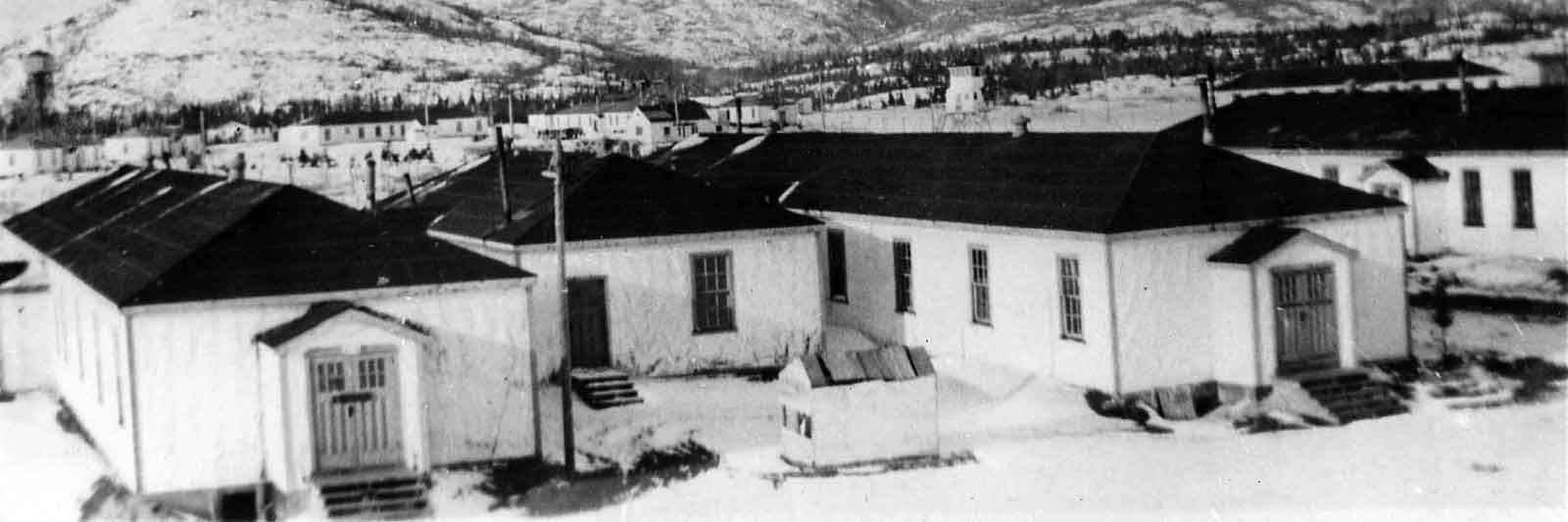
The act of confining or detaining “belligerent” or “enemy nationals” during wartime. People of Japanese ancestry were removed from the West Coast and dispersed to work camps, sugar beet farms, and internment camps in the interior of BC for the duration of the war and an additional 4 years after the end of World War II. The liberties and movement of all internees were closely monitored and severely restricted until 1949.
issei (ees-say), nisei (nee-say), sansei (sun-say), yonsei (yon-say)
Japanese language terms used to describe first, second, third, and fourth generation settlement in Canada.
Nikkei (neek-kay)
Means ethnically Japanese. Nikkei Kanadajin means Canadian of Japanese ethnicity. This term is important because it separates ethnicity from citizenship and self-identification.
prejudice
A predetermined judgment (based on faulty interpretation) made using wrong or distorted facts. This attitude, usually negative, is directed toward a person or group of people. Prejudiced thinking may result in acts of discrimination.
propaganda
The systematic effort of controlling public opinion or a course of action by using selected facts, ideas or allegations.
protected area
An area extending 100 miles (about 160 kilometers) from the coast of BC to the Cascade Mountains was deemed a secure area. This designation gave justification and support for the public and political forces that removed Japanese Canadians from coastal settlements in BC.
racism
A set of incorrect assumptions, opinions and acts resulting from the belief that one race is inherently/genetically superior to another. It occurs when people are not treated fairly because of their cultural or ethnic differences. Racism may be systemic (part of institutions, organizations, and programs) or part of the attitudes and behaviour of individuals.
redress
To set right or make reparation by compensation or by punishment of the wrong doer. Refers to the movement within the Japanese Canadian community for an official apology and financial compensation, as well as the final acknowledgement by the federal government in 1988. Under Prime Minister Mulroney the Government of Canada gave an official apology for the injustices it had enacted upon Japanese Canadians and announced a financial compensation package of some $300 million.
relocation
To move to another place. Besides the earlier “evacuation” in 1942, this term also includes the forced removal and movement of Japanese Canadians at the end of the war with Japan in 1945. As documented in a Department of Labour order, Japanese who were loyal to Canada were expected to prove their loyalty by moving “east of the Rocky Mountains.” This order was given in concert with an offer of repatriation to Japan in 1945 - 46. In practical terms all people of Japanese ancestry were pressured to leave BC.
repatriation
To send back to one's own country or to a place of citizenship. Order-in-Council PC 7355 authorized the Government of Canada to provide for the “deportation” and “repatriation” of persons of Japanese ancestry. Those who were unwilling to resettle east of the Rockies were considered disloyal. However, the federal government encouraged Japanese Canadians to voluntarily “repatriate” to Japan.
resettlement
At the end of the war Japanese Canadians were strongly pressured to establish themselves outside of British Columbia. Over 9,000 Japanese Canadians made new homes in Alberta, Saskatchewan, Manitoba and Ontario. The policy was designed to disperse those of Japanese ancestry throughout Canada. However, the federal government failed to recognize that Japanese Canadians were not welcome in Moose Jaw any more than they were in Vancouver, and were being sent to another hostile environment. Not until 1949 were Japanese Canadians allowed to return to the “protected area” within 100 miles (160 kilometers) of the Pacific Ocean.
restitution
The act of making good for something that is lost or taken away. Japanese Canadians were deprived of their possessions, livelihood, rights and freedoms from 1941 to 1949. They were victims of injustices and were seeking restitution for these wrongs.
sabotage
An act to deliberately damage or destroy something in order to hinder or hurt. Politicians and some people in British Columbia suspected that Japanese Canadians would not be loyal to Canada and would become spies and saboteurs. There is no evidence that this ever happened. Prime Minister Mackenzie King said in the House of Commons, August 4, 1944: “It is a fact that no person of Japanese race born in Canada has been charged with any act of sabotage or disloyalty during the years of war.”
stereotyping
The formation of belief(s) about a person or groups of people that does not recognize individual differences. Stereotyping may be positive or negative in character.